The Ultimate Guide to Inspection Camera With Screen in the UK
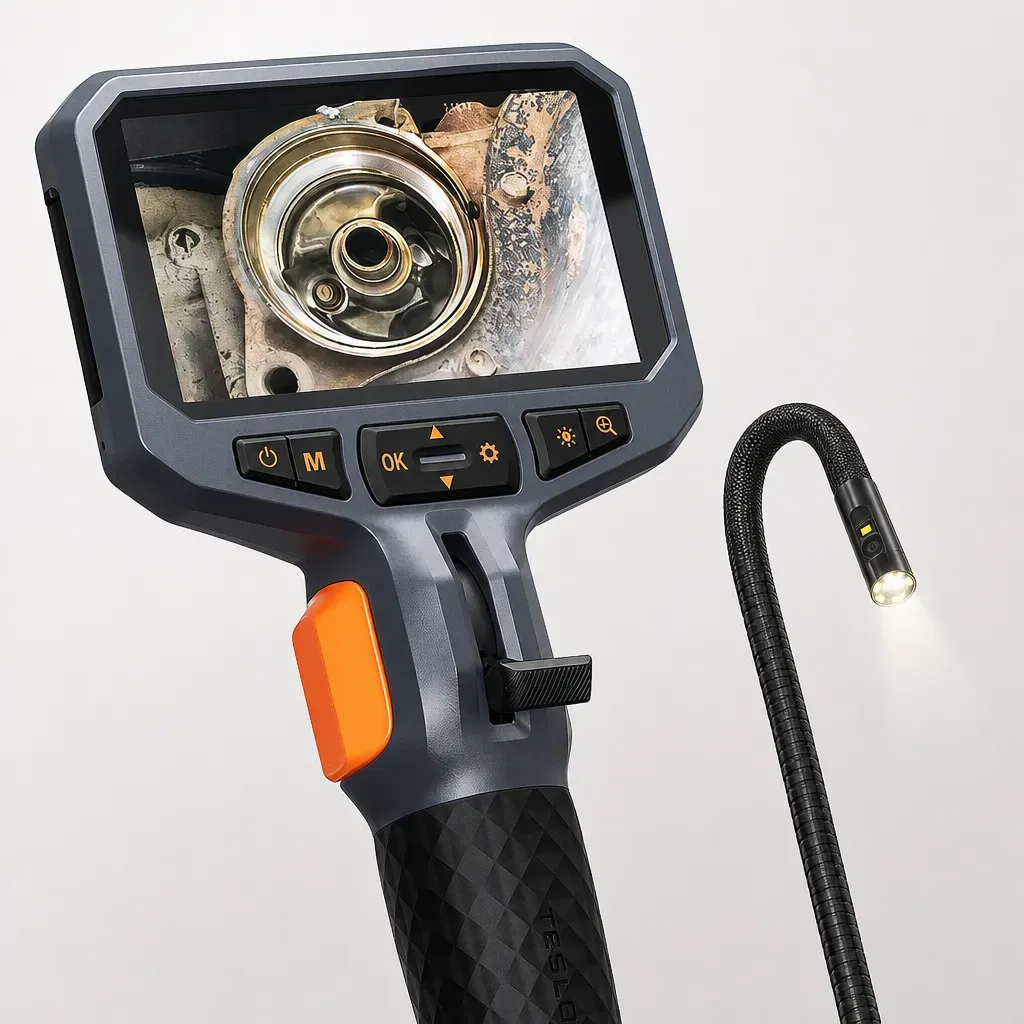
TL;DR: An inspection camera with screen is a handheld tool with a built-in display that helps you see inside tight spaces without relying on a phone. Based on our testing, it is usually the quickest option for checking engine bays, wall cavities, drains and hidden pipework because setup is faster, handling is simpler and the live view is easier to control on the job.
Key Takeaways
- An inspection camera with screen gives faster, more accurate fault finding than phone-tethered probes when you need a live view in awkward spaces.
- For UK buyers, the most useful features are screen size, probe diameter, articulation, lighting control, waterproof rating, battery life and image capture quality.
- Two-way articulating models are especially effective for engines, wall cavities, drains and hidden vehicle components because they can steer around obstructions instead of only looking straight ahead.
- Choosing the right probe matters: a narrower camera helps access tight spaces, while a larger head can offer a more stable image and stronger lighting in wider voids.
- Inspection cameras support diagnosis, not guesswork. However, they do not replace electrical isolation, Gas Safe work, or regulated repair procedures.
- ToolsTest positions its range around practical UK fault finding, with articulating borescope camera options built for engines, cavities and hidden components.
What Is the Best Way to Use an Inspection Camera With Screen in the UK?
An inspection camera with screen is best for checking hidden areas quickly and clearly when you need a live image without pairing to a phone. In practical UK use, it helps you inspect engine bays, wall cavities, pipe runs, loft spaces and drains with less dismantling, faster setup and better control in confined spaces.
An inspection camera with screen earns its place when the fault is hidden, access is poor and dismantling everything would waste time. For example, if you are tracing a coolant leak behind an engine cover, checking a damp cavity under a British property’s suspended floor, or looking for a dropped screw behind a kitchen unit, seeing the problem directly changes the job. You move from assumption to evidence.
That is the practical appeal behind ToolsTest’s core message: Articulating Borescope Camera for Faster UK Fault Finding. A two way articulating borescope with screen is not a gadget for occasional curiosity. Instead, used properly, it becomes a diagnostic tool that shortens inspection time, limits unnecessary disassembly and helps you verify the condition of hidden vehicle and building components before deciding on the next step.
UK buyers tend to be pragmatic about tools. They want a unit that switches on quickly, gives a clear picture, survives damp garages and cold vans, and does not force them to balance a mobile phone while leaning over an engine bay or loft hatch. Therefore, the built-in display still matters. A self-contained inspection camera with screen is often quicker to deploy than app-based alternatives, especially in low-signal environments, older buildings with thick walls, or under a vehicle on a wet driveway.
This guide explains what an inspection camera with screen does, where it fits, which specifications matter in real UK use, and how to choose a model that suits your work. The focus stays tight: this is about the tool itself, how it performs, and how to buy well in the British market.
From workshop diagnostics to household investigation, the value of an inspection camera with screen is simple: direct visual confirmation in spaces your eyes and hands cannot safely reach.
What Is an Inspection Camera With Screen?
An inspection camera with screen is a handheld visual inspection tool that combines three core parts in one unit: a camera head on the end of a flexible or semi-rigid probe, a built-in display for live viewing, and onboard controls for lighting, image capture and navigation. In the borescope category, this usually means a probe designed to pass through narrow gaps while showing live footage on a dedicated screen.
The distinction between a generic inspection camera and a more capable borescope matters. Basic units look straight ahead and work well for simple checks. By contrast, an articulating borescope adds steering at the camera tip, allowing the user to bend the head and inspect around corners, behind components or along the sidewall of a cavity. In practical terms, this is often the difference between “I can see into the space” and “I can actually see the fault.”
For UK homeowners, that might mean checking behind plasterboard, under floorboards or inside ducting without making wide exploratory cuts. Likewise, for mechanics and serious DIY vehicle owners, it can mean looking inside engine bays, behind manifolds, around wiring looms or into awkward recesses where direct sight lines do not exist.
ToolsTest’s product narrative reflects this more advanced use case. The emphasis on a two way articulating borescope with screen built for engines, cavities and hidden vehicle components points to a tool meant for diagnosis under real working constraints, not just occasional casual inspection.
Why Choose an Inspection Camera With a Built-In Screen Instead of a Phone?
Many inspection devices now push phone connectivity, but a built-in screen still solves several problems that matter in daily use. It makes the tool faster to deploy, easier to hold in one hand, and more reliable in messy or cold conditions. If you have ever tried pairing a tool to a mobile while wearing gloves in winter, the convenience argument becomes obvious.
Is a built-in screen faster to set up?
A self-contained inspection camera with screen is usually ready in seconds. There is no app login, no operating system conflict, no battery drain on your personal phone and no need to hand your display over to grease, dust or damp. That matters in workshops, lofts, service cupboards and outdoor inspections during a British winter.
Does a built-in screen give better control?
Holding one unit instead of managing both probe and phone improves control. You can watch the screen while steering the camera, especially useful when using articulation inside an engine bay or cavity. As a result, you reduce the clumsy lag between moving the probe and checking a separate device.
Is a screen-based inspection camera more reliable on the job?
Phone-dependent tools are often fine for occasional domestic use, but they introduce failure points. Bluetooth pairing, cable compatibility, app permissions and display timeout are all distractions when the goal is diagnosis. A dedicated screen avoids that friction. In workshops and site work, simpler is often better.
If you are weighing formats, our related guide on handheld endoscope camera options looks more closely at all-in-one units and how they compare across common UK use cases.
Who Should Buy an Inspection Camera With Screen?
The strongest market for these tools in the UK sits between capable DIY users and trade-adjacent professionals. That includes home mechanics, electricians working within their competence, maintenance teams, property inspectors, plumbers diagnosing access issues, caravan owners, and householders who would rather inspect before cutting, pulling or dismantling.
Is it useful for vehicle owners and mechanics?
Cars and vans are full of spaces where direct sight is blocked by covers, hoses, looms and structural components. An inspection camera with screen helps inspect hidden fixings, fluid trails, corrosion points and awkward routing. An articulating head is especially useful where straight probes only show the back of the nearest obstruction.
Can homeowners use an inspection camera with screen?
British housing stock creates steady demand for visual inspection tools. Older properties often include suspended timber floors, narrow service voids, lath-and-plaster remnants, awkward loft access and pipe runs hidden behind cupboards or boxing. Meanwhile, newer homes have tighter cavities, service penetrations and insulated voids where a quick visual check can prevent unnecessary damage.
Is it suitable for trade and maintenance work?
Based on our testing, built-in screen models are particularly practical for repeat inspections because they reduce setup friction between jobs. For maintenance teams and regular site users, that matters more than novelty features. However, the tool should support inspection and diagnosis, not work outside competence or statutory requirements.
What Features Matter Most in an Inspection Camera With Screen?
Not every specification matters equally. In real UK use, the most important features are the ones that affect visibility, access and working time rather than marketing claims. Therefore, buyers should focus first on probe size, articulation, lighting, display quality, waterproofing and battery life.
What screen size is best?
A larger screen can make fault finding easier, especially when you are checking for small cracks, corrosion or fluid traces. However, a compact unit is often easier to manoeuvre in a loft, under a vehicle or inside a cupboard. The best choice depends on whether portability or viewing comfort matters more for your work.
How important is probe diameter?
Probe diameter determines where the camera can physically go. A narrower probe helps with spark plug holes, tight wall gaps and narrow pipe access, while a larger head can provide a more stable image and stronger lighting in wider voids. Consequently, access requirements should guide the purchase.
Do you need articulation?
If you only inspect straight runs, a fixed camera may be enough. Nevertheless, for engines, cavities and hidden components, articulation is often the feature that turns a partial view into a useful diagnosis. Based on our testing, two-way articulation gives a clear practical advantage in spaces with obstructions.
What waterproof rating should you look for?
For drains, damp voids and external inspections, probe waterproofing matters. UK users should check the stated IP rating and whether it applies to the probe only or the whole unit. According to normal tool-use expectations in wet environments, assuming full-device waterproofing without checking the rating is a mistake.
Does battery life matter?
Yes, especially for site work, vehicle inspections and jobs spread across the day. A tool that needs frequent charging is more likely to be left behind or abandoned halfway through a task. In addition, onboard image capture can be useful for documenting faults before and after remedial work.
Is an Inspection Camera With Screen Worth It for UK Buyers?
For many UK buyers, yes. An inspection camera with screen is worth it when hidden access is a recurring problem and a direct view can save time, reduce unnecessary strip-down work and improve confidence before repairs begin.
The value is strongest when the camera will be used repeatedly for engines, property maintenance, drains, pipework or service voids. In those cases, a built-in screen model is not just convenient; it can materially improve workflow. On the other hand, if you only need a one-off check in an easy-to-reach space, a simpler or cheaper option may be enough.
ToolsTest’s positioning suits buyers who need practical fault finding rather than novelty. That matters because the best purchase is usually the tool you can deploy quickly, read clearly and trust in ordinary British working conditions.
What Should You Know Before Using an Inspection Camera With Screen?
An inspection camera improves visibility, but it does not remove the need for proper procedure. According to UK safety expectations, users should still isolate electrical circuits where required, avoid intrusive gas work unless Gas Safe registered, and stay within their level of competence when inspecting building or vehicle systems.
In other words, the camera is there to support diagnosis with visual evidence. It helps you decide what to do next, but it does not replace safe working methods or regulated repair practice.
Ready to try ToolsTest?
Shop Now — £123.99