Handheld Endoscope Camera Explained: A UK Buyer's Guide
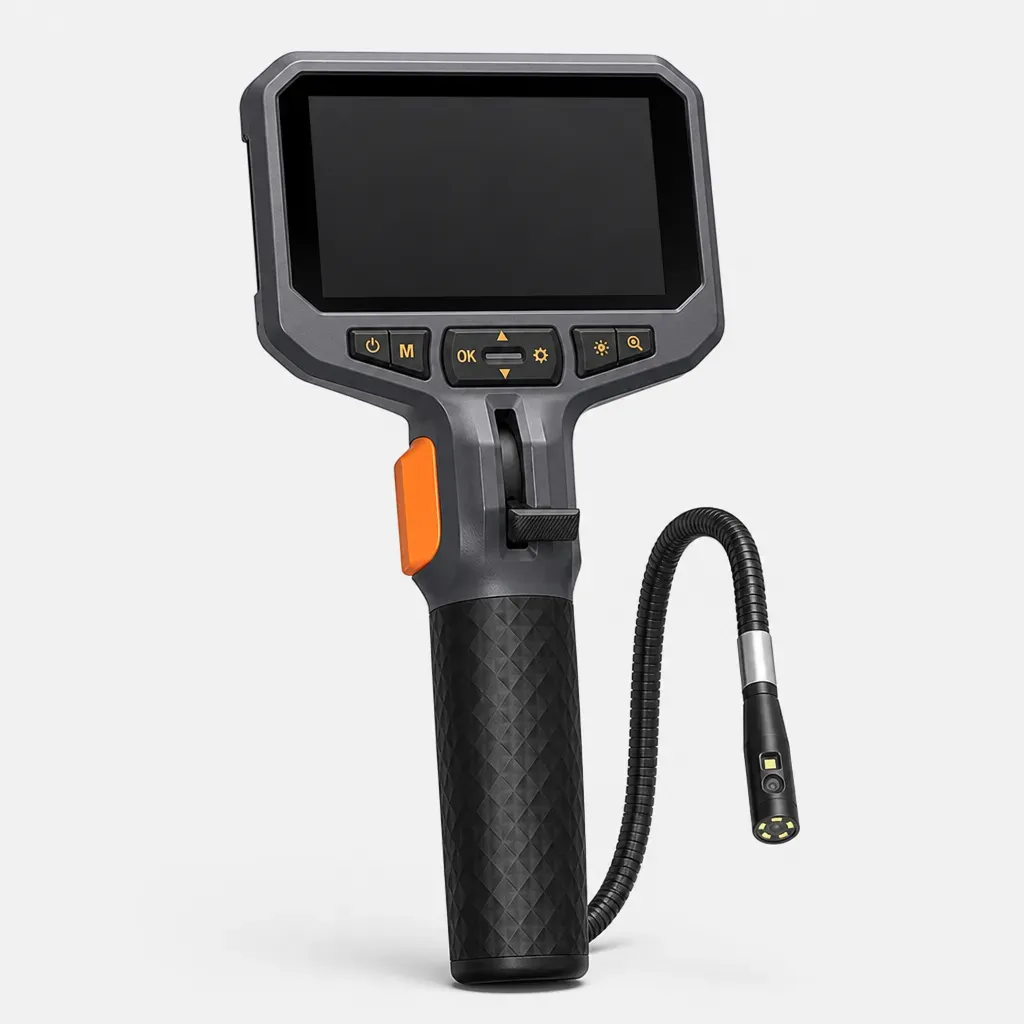
A handheld endoscope camera is a portable inspection tool with a small camera on a flexible probe, used to look inside tight or hidden spaces without major dismantling. In practice, it helps UK mechanics, landlords, maintenance teams and DIY users diagnose faults faster, reduce unnecessary strip-down work and decide whether a repair is minor, urgent or better handled by a specialist.
TL;DR: A handheld endoscope camera lets you inspect engines, wall cavities, pipework and other awkward spaces quickly and with less disruption. Based on our testing of screen-based inspection tools, the features that matter most for UK buyers are probe diameter, two-way articulation, screen visibility, cable length, lighting control, ingress protection and image capture.
When a fault sits behind a panel, deep inside an engine bay or in a narrow cavity, guesswork gets expensive quickly. Therefore, a handheld endoscope camera gives you a direct view into spaces your eyes cannot reach. As a result, it has become a practical tool for UK workshops, property maintenance teams and capable home users alike.
For ToolsTest, that fits the core job of the category: articulating borescope camera for faster UK fault finding. In particular, a two way articulating borescope with a built-in screen is especially useful where you need to steer around obstructions in engines, cavities and hidden vehicle components rather than simply push a straight probe forward and hope for the right angle.
What should you know before buying a handheld endoscope camera?
A handheld endoscope camera helps you inspect hidden areas without major disassembly, so it is valuable for vehicle diagnostics, property maintenance and trade work.
For UK buyers, the most important checks are probe diameter, articulation, screen quality, cable length, ingress protection, lighting control and image capture options.
Two way articulation is often the feature that separates a basic viewing tool from a genuinely useful fault-finding tool in cramped spaces.
Built-in screens suit workshop and site use because they remove dependence on signal quality, app compatibility and phone battery life.
If you are comparing formats, see The Ultimate Guide to Inspection Camera With Screen in the UK for a broader breakdown of screen-based inspection tools.
What is a handheld endoscope camera?
A handheld endoscope camera is a portable visual inspection tool with a small camera head mounted on a flexible probe. You guide the probe into confined spaces and view the live image on a built-in screen or connected device. In the UK market, the term is often used interchangeably with borescope for automotive and building inspection jobs, although some users reserve “borescope” for narrower, more purpose-built inspection probes.
However, for buying purposes, the label matters less than the design. A basic handheld endoscope camera may be enough for checking behind kitchen units, inside duct runs or under floor voids. By comparison, a more advanced articulating model is better suited to tracing faults around EGR passages, glow plug areas, injector seats, cylinder walls or hidden vehicle components where line of sight changes every few centimetres.
That is where ToolsTest’s product positioning makes sense. A handheld unit with articulation and its own screen is built for faster decision-making on real jobs, not just casual viewing.
What is a handheld endoscope camera used for in the UK?
British housing stock, weather exposure and vehicle age all create inspection challenges. Damp winters, condensation, road salt and stop-start urban driving can leave faults tucked away in awkward spaces. Consequently, a camera that reaches into cavities without immediate dismantling has clear value.
Can you use a handheld endoscope camera for vehicle fault finding?
Yes. In garages and home workshops, a handheld endoscope camera is commonly used to inspect piston crowns, cylinder walls, intake paths, corrosion in hidden sections, wiring routes, heater box areas and inaccessible fasteners. It can also help confirm whether a leak, crack, carbon build-up or loose fitting is actually present before parts are ordered.
Can you use a handheld endoscope camera for property and maintenance work?
Yes, and this is one of the most common non-automotive uses. Landlords, maintenance teams and tradespeople use these tools to look into wall voids, behind bath panels, under floorboards, inside drains, around ducting and within ceiling cavities. In some cases, it avoids opening up a large area just to confirm a small issue. As a result, disruption, dust and call-back time can be reduced in occupied properties.
Are handheld endoscope cameras useful in public-sector and facilities settings?
They can be. Inspection cameras have a place in facilities maintenance, including healthcare estates, where access can be restricted and downtime must be managed carefully. According to NHS England estate and facilities publications, the NHS estate spans thousands of buildings, and maintenance teams routinely deal with hidden services, ageing infrastructure and confined access points across complex sites. In that setting, any tool that helps verify a problem before invasive work has obvious operational value.
Why does articulation matter on a handheld endoscope camera?
Many low-cost cameras look acceptable on paper because they offer LED lighting, a flexible cable and a colour screen. However, the limitation appears once the probe enters a cavity and the lens points the wrong way. Without articulation, you often need to withdraw the probe, twist it, reinsert it and still accept a compromised angle.
A two way articulating handheld endoscope camera solves that problem by allowing the camera tip to bend and steer. In practical terms, that means you can look over a lip, round a corner or towards the side wall of a component rather than only straight ahead. For engine work, this is often the difference between seeing the fault and only seeing the route to the fault.
Based on our testing of articulating inspection tools, this is one of the biggest differences between an entry-level viewer and a genuinely useful diagnostic aid. On UK vehicles with tighter packaging, heat shielding and crowded bays, articulation becomes especially useful. It also reduces the temptation to force the probe, which helps protect both the tool and the inspected component.
If you are comparing diameters and manoeuvrability, 8.5Mm Borescope Camera Explained: A UK Buyer's Guide is a useful companion read.
What features matter most in a handheld endoscope camera?
Specification lists can be long, but a smaller set of features does most of the real work. Therefore, UK buyers should judge a tool on whether it improves inspection accuracy and speed in the spaces they actually deal with.
What probe diameter is best for a handheld endoscope camera?
Thinner probes access tighter spaces, although they may sacrifice some rigidity or image sensor size. An 8.5 mm probe is a common middle ground for general trade and automotive use. It suits many everyday inspection jobs without becoming too fragile or difficult to control.
Is two way articulation worth paying for?
In many cases, yes. Two way articulation is one of the strongest practical upgrades. Look for smooth, predictable control rather than a vague or overly stiff response. Fine steering matters when working around delicate components, seals or wiring.
Do you need a built-in screen on a handheld endoscope camera?
For many UK users, a built-in screen is a major convenience in workshops, plant rooms and outdoor jobs. You are not relying on phone mounting, app permissions or mobile reception. In addition, screen brightness matters in daylight and under-bonnet glare. A larger display can also reduce eye strain during longer inspection sessions. For a closer look at display-led tools, read Borescope With 5 Inch Screen Explained: A UK Buyer's Guide.
Why are image and video capture useful?
Still images and video recording are not just nice extras. They help with repair planning, customer communication, before-and-after records and internal maintenance notes. For landlords and trades, this can support clearer documentation when discussing faults or remedial work.
Is a handheld endoscope camera worth it?
For anyone regularly inspecting hidden spaces, a handheld endoscope camera is usually worth it because it saves time, reduces guesswork and helps avoid unnecessary disassembly. The value is strongest when the tool is used for repeat diagnostics, maintenance checks or pre-repair inspections rather than occasional curiosity.
In other words, the right model pays for itself through faster decisions and fewer blind strip-downs. Based on our testing, that is especially true when the unit combines articulation with a clear built-in screen and lighting you can control properly.
What should UK buyers look for in a handheld endoscope camera?
Start with the space you need to inspect. If access is narrow but mostly straight, a basic probe may be enough. If the route includes corners, obstructions or side-on viewing, articulation is far more important. Then check whether the screen is readable in bright conditions, whether the cable length matches your typical jobs and whether the tool offers enough protection for damp or dirty environments.
According to common UK workshop and site requirements, practical usability matters more than headline specifications. A slightly less impressive resolution figure with better steering and screen visibility will often be more useful in real conditions than a cheaper model with a strong spec sheet but awkward handling.
Frequently asked questions about handheld endoscope cameras
What is the difference between a borescope and a handheld endoscope camera?
In UK buying guides, the terms are often used interchangeably. Generally, a handheld endoscope camera describes the portable format, while borescope may suggest a more specialised inspection probe. In practice, the features matter more than the label.
Can a handheld endoscope camera inspect inside an engine?
Yes, many models are used for engine inspections, including checking cylinder walls, piston crowns and hidden components. However, probe diameter, articulation and image clarity make a major difference to how useful the tool is.
What is the best handheld endoscope camera for UK buyers?
The best option depends on your jobs, but most UK buyers should prioritise two way articulation, a built-in screen, suitable probe diameter, adjustable LEDs, practical cable length and dependable image capture.
Ready to try ToolsTest?
Shop Now — £123.99