8.5Mm Borescope Camera Explained: A UK Buyer's Guide
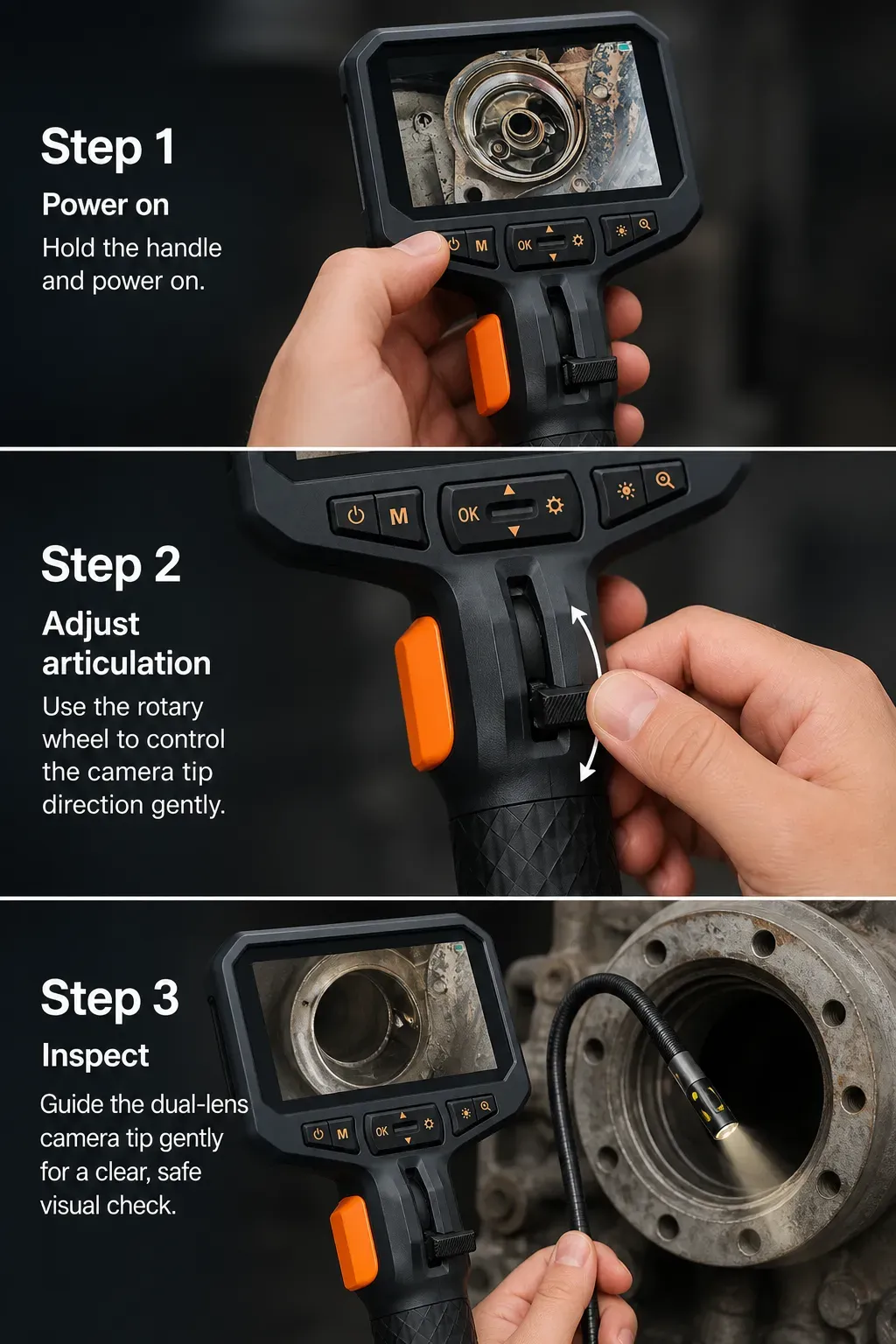
TL;DR: An 8.5mm borescope camera is usually the best all-round size for UK users who need to inspect engines, cavities, drains and hidden components because it balances access, lighting, image stability and durability better than many slimmer or bulkier alternatives.
Key Takeaways
- An 8.5mm borescope camera is a practical mid-size inspection tool for UK garages, workshops, property maintenance teams and capable DIY users who need to check hidden areas without stripping parts unnecessarily.
- The 8.5mm diameter usually offers a useful balance between access, image stability, LED brightness and durability, especially for engines, cavities, drains, ducting and under-dash inspection.
- For fault finding, camera diameter matters as much as screen quality, cable length, articulation, lighting control and ingress protection.
- Two-way articulating designs are especially useful when inspecting around bends, behind components and inside awkward vehicle spaces where a fixed camera head can only show a limited view.
- UK buyers should assess the real working environment: damp winter conditions, dirty engine bays, confined service voids and the need for fast checks before committing labour time.
What Is an 8.5mm Borescope Camera and Is It a Good Size?
An 8.5mm borescope camera is an inspection camera with a probe head measuring 8.5mm across, and for most UK buyers it is a good size because it can reach many confined spaces while still delivering stronger lighting, a steadier image and better durability than many ultra-slim probes.
When a fault is hidden behind trim, inside an engine bay or deep in a cavity wall, guesswork becomes expensive. Therefore, this size often sits in the practical middle ground: narrow enough for many real inspection jobs, yet large enough to carry useful LEDs, a stable sensor and a tougher probe housing.
For buyers comparing inspection tools on toolstest.co.uk, the decision is rarely about headline specs alone. Instead, it is about finding faults faster, reducing unnecessary strip-downs and seeing clearly in the sort of real conditions UK users deal with every week: wet engine bays, condensation-prone outbuildings, service voids, blocked drainage runs and corroded fasteners hidden from direct view.
Based on our testing and product comparison work at ToolsTest, camera access is only half the job. If the probe reaches the area but cannot angle towards the suspected defect, the inspection still slows down. As a result, a two way articulating borescope with screen can make the difference between spotting the issue in minutes and dismantling surrounding components just to improve the viewing angle.
If you are still weighing screen size, portability and probe format, it helps to read this guide alongside The Ultimate Guide to Inspection Camera With Screen in the UK, which covers the wider category in more depth.
What Does 8.5mm Mean on a Borescope Camera?
The 8.5mm figure refers to the diameter of the camera head at the end of the probe. In simple terms, it tells you the minimum gap the camera can physically enter. Because of that, the measurement directly affects access, manoeuvrability, lighting performance and the kinds of jobs the tool can handle confidently.
In use, 8.5mm is not just a number on a product listing. It shapes the whole inspection experience. A larger head generally gives manufacturers more room for LEDs, lens protection and a more robust housing. Consequently, that can improve usability in darker, dirtier environments. However, if the head is too large, access becomes limited. If it is too small, you may lose image clarity, probe toughness or enough illumination for meaningful diagnosis.
For many UK buyers, that balance is why this size remains popular. It is suitable for many vehicle, domestic and workshop checks without becoming overly specialised.
Why Is 8.5mm Often a Practical Middle Ground?
- Small enough for many spark plug holes, body cavities, pipe runs and service gaps.
- Large enough to support decent onboard LED lighting.
- Typically more durable than very thin consumer probes.
- Easier to control visually than budget probes with weak image sensors.
- Well matched to built-in screen units designed for quick standalone use.
That last point is especially relevant for fault finding on the move. In a driveway, workshop or plant room, a self-contained unit with its own display can be quicker and more reliable than depending on a phone connection. Buyers comparing form factors may also want to see Handheld Endoscope Camera Explained: A UK Buyer's Guide.
What Is an 8.5mm Borescope Camera Used For?
This diameter is widely used because it covers several real-world tasks without becoming a niche tool. In the UK market, that matters. Many buyers want one inspection camera that can move between vehicle checks, property maintenance and workshop diagnostics.
Can You Use an 8.5mm Borescope Camera for Vehicle Fault Finding?
Yes. For automotive users, an 8.5mm borescope camera is commonly used to inspect cylinders, intake paths, injector areas, underbody corrosion spots, heater box spaces, wiring runs and hidden fastener locations. Because modern vehicles are tightly packaged, a straight look from above is often impossible. Therefore, an articulating head helps you inspect behind hoses, around turbo pipework and into voids behind trim.
That is closely aligned with the ToolsTest product focus: a two way articulating borescope with screen built for engines, cavities and hidden vehicle components. In practice, this setup shortens diagnostic time because it lets you confirm conditions before removing adjacent parts.
Is an 8.5mm Borescope Camera Useful for Property Maintenance?
Yes, especially in UK housing stock where narrow voids, older construction methods, damp-prone cavities and awkward access points are common. An 8.5mm camera is useful for checking inside ceiling voids, boxing-in, under floorboards, behind kitchen units and around extractor ducts. It can help verify moisture staining sources, pest entry points, disconnected pipe sections or insulation issues without immediately opening larger sections of the structure.
According to UK regulatory requirements, a borescope remains a visual inspection tool rather than a substitute for licensed trade judgement. Electrical work in dwellings may fall under Part P requirements, and gas appliances must be handled by a Gas Safe registered engineer where applicable. Therefore, the camera helps you see more before deciding who needs to attend.
Can an 8.5mm Borescope Camera Be Used for Drains, Ducting and General Maintenance?
Yes, within its limits. In workshops and facilities maintenance, 8.5mm probes are often used for machine housings, inaccessible brackets, duct interiors, blocked outlets and light-duty drain checks. Moreover, UK winters make this more relevant than many buyers expect. Moisture, road salt and debris increase the chances of corrosion, blockage and contamination in enclosed spaces. So, a camera that can tolerate damp environments and wipe clean easily is a practical asset rather than a luxury tool.
Why Does Articulation Matter on an 8.5mm Borescope Camera?
Many buyers focus on diameter first and leave articulation until later. In real fault finding, that can be the wrong order. Access is only useful if you can aim the lens at the suspected fault. A fixed-forward probe may enter the cavity but still miss the cracked hose, damaged connector, carbon build-up or trapped debris sitting just off-axis.
Two-way articulation gives the operator directional control at the camera tip, usually up and down relative to the probe orientation. Although that sounds modest on paper, it transforms what the tool can actually show once inside a tight space. As a result, the user spends less time withdrawing and re-feeding the probe just to chase a better angle.
When Is a Two-Way Articulating Borescope Most Useful?
- Inspecting behind engine components where direct sight lines are blocked.
- Looking around bends in pipe runs, ducting or service voids.
- Checking the side walls of cavities rather than only the area straight ahead.
- Reducing strip-down time when you need visual confirmation before disassembly.
Based on our testing of articulating inspection cameras, articulation becomes more valuable as access gets tighter and the suspected defect moves further off-centre. So, for UK technicians and serious DIY users, it is often a feature worth prioritising alongside image quality and probe length.
How Do You Choose the Best 8.5mm Borescope Camera in the UK?
If you are comparing models, it helps to judge them by the job rather than by marketing claims alone. In other words, the best 8.5mm borescope camera for a garage may not be the best one for building maintenance or drainage checks.
What Features Should You Look for First?
- Probe diameter and whether 8.5mm will fit your typical access points.
- Articulation, especially for vehicle and hidden cavity inspections.
- Screen quality and brightness for indoor and outdoor use.
- LED control for reflective metal, damp surfaces and dark voids.
- Cable length and stiffness for the spaces you inspect most often.
- Ingress protection for damp, dirty or workshop conditions.
- Battery life and standalone usability for site work or mobile diagnostics.
For UK buyers, those points matter because working conditions are rarely clean or ideal. Damp winter weather, muddy equipment, oily engine bays and cramped service spaces all place more strain on the tool than a product page suggests.
Is an 8.5mm Borescope Camera the Right Choice for Most Buyers?
For many UK users, yes. An 8.5mm borescope camera is often the right choice when you want one dependable inspection tool for engines, cavities, pipework and general maintenance without moving into a highly specialised setup.
It is especially well suited to buyers who value a practical balance of access, visibility and durability. However, it still pays to match the tool to the task. If you regularly need to pass through extremely tight openings, a slimmer probe may be necessary. On the other hand, if your priority is better control around obstructions, an articulating 8.5mm model can be the stronger option.
Ultimately, the most useful unit is the one that helps you confirm faults quickly, avoid unnecessary dismantling and work confidently in typical UK conditions.
Frequently Asked Questions About 8.5mm Borescope Cameras
Is 8.5mm a good size for a borescope camera?
Yes. For many UK applications, 8.5mm is a strong all-round size because it balances access with useful lighting, image stability and probe durability.
Can an 8.5mm borescope camera inspect car engines?
Yes, it is commonly used for cylinders, intake areas, wiring routes, hidden fasteners and other difficult-to-see engine bay spaces, particularly when paired with articulation.
Is an 8.5mm borescope camera suitable for home use?
Yes. It can be useful for checking ceiling voids, under floors, behind units, around ducts and inside service gaps. However, it does not replace qualified judgement for regulated electrical or gas work.
Should you choose articulation on an 8.5mm borescope camera?
If you inspect around bends, behind components or into awkward vehicle spaces, articulation is often worth paying for because it improves the chance of seeing the actual fault without extra dismantling.
Ready to try ToolsTest?
Shop Now — £123.99