Borescope With 5 Inch Screen Explained: A UK Buyer's Guide
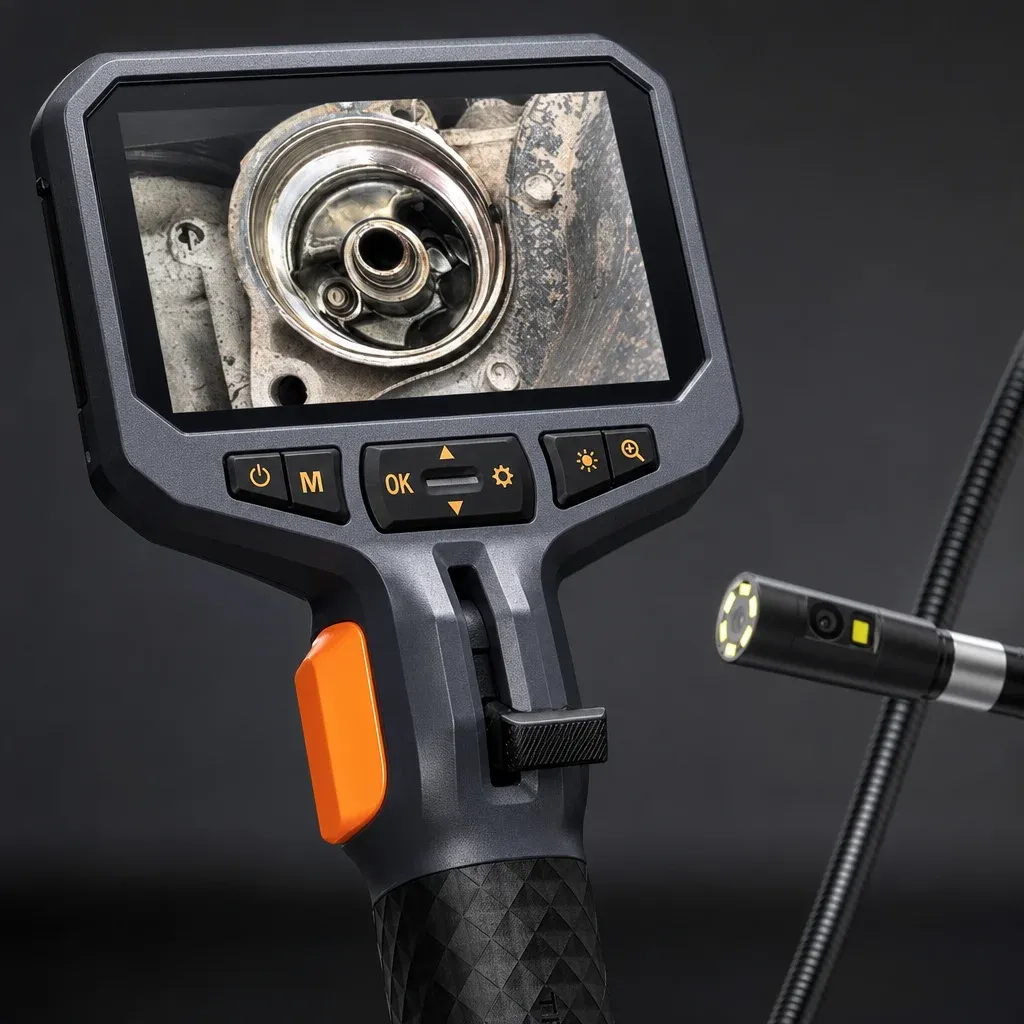
A borescope with 5 inch screen sits in a useful middle ground for UK buyers: large enough to inspect faults clearly without needing a phone or laptop, yet still compact enough to carry round a garage, plant room, workshop or van. For many jobs, that balance is what speeds up fault finding. You can get the probe into a tight area, keep both hands on the tool, and view the image without squinting at a tiny display.
At ToolsTest, we see why this format appeals to buyers who want faster UK fault finding. An articulating borescope camera with screen is particularly practical for engines, wall cavities and hidden vehicle components, where access is awkward and repeat inspections are common. If you are comparing models and trying to work out whether a 5 inch screen is the right choice, this guide breaks down the real buying factors rather than vague sales claims.
Key Takeaways
- A borescope with 5 inch screen offers a stronger viewing experience than pocket-sized displays while remaining portable for trade and DIY use.
- For UK garages, plumbing, HVAC and property maintenance, screen quality, probe diameter, articulation and lighting matter more than headline megapixel claims.
- A standalone screen can be more reliable on site than phone-dependent inspection cameras, especially in cold, damp or dirty working conditions.
- Two-way articulation is often the deciding feature when inspecting around bends, valves, cylinder areas and concealed vehicle parts.
- Before buying, check battery life, ingress protection, storage, cable length and whether the image remains usable under workshop lighting.
What Is a Borescope With 5 Inch Screen?
A borescope with 5 inch screen is an inspection camera system with a built-in display measuring roughly 12.7 cm diagonally. The camera head sits at the end of a flexible or semi-rigid probe, sending live video back to the screen. Unlike USB endoscopes that rely on a phone app, this type is self-contained. You switch it on, insert the probe and inspect the area directly.
That sounds simple, though the practical difference is significant. A larger integrated display gives better visibility when checking carbon build-up in an engine, tracing a blockage in pipework, or looking behind interior trim. It also makes it easier to share the view with a colleague or customer without passing round a phone.
Many buyers start broader, then narrow down to screen size once they understand how these tools are used in practice. If you want a wider overview of product types and use cases, see The Ultimate Guide to Inspection Camera With Screen in the UK.
Why a 5 Inch Screen Makes Sense for UK Buyers
Better visibility without losing portability
Small 2.4 inch and 3.5 inch displays can work for quick checks, but they are less forgiving when you need to examine fine detail. A 5 inch screen gives more room to judge corrosion, fluid leaks, casting damage, loose fixings and surface condition. That matters when the decision is whether a part can stay in service or needs stripping down.
For a mobile mechanic or heating engineer, portability still counts. A 5 inch unit is usually compact enough to store in a van drawer or carry in a tool case without becoming cumbersome. In use, it tends to feel more stable than a phone-and-cable setup, especially when wearing gloves.
Useful in poor light and awkward positions
UK working conditions are not always kind to inspection gear. Winter call-outs, damp lock-ups, dark loft voids and poorly lit garages are common. A larger IPS-style display can help maintain colour and contrast when you are leaning at an angle or working under mixed workshop lighting. That is one reason the format is popular with users inspecting engines, drainage runs, ducting and hidden structural spaces.
A practical fit for shared trade use
In many businesses, one inspection camera is used by more than one person. A standalone borescope with 5 inch screen removes app compatibility issues and makes training easier. A technician can hand the unit to a colleague and the controls are normally obvious: brightness, zoom, capture and menu access. Less setup means less wasted time on site.
Where a Borescope With 5 Inch Screen Is Most Useful
Vehicle inspection and engine diagnostics
This is one of the strongest use cases. You can inspect combustion chambers, piston crowns, injector areas, intake passages and hidden components without major disassembly. Two-way articulation is especially valuable here, because a straight probe can miss the exact surface you need to see.
For UK motorists and workshops, reducing strip-down time matters. The Society of Motor Manufacturers and Traders reported that the UK car parc reached 41.4 million vehicles in 2023, a new record level. Source: SMMT. A larger vehicle population means ongoing demand for tools that help garages diagnose faults efficiently and document findings clearly.
Plumbing, drains and pipe runs
A 5 inch screen is helpful when checking inside waste pipes, tracing obstructions or inspecting inaccessible voids behind sanitary ware. Fine detail matters here too. You may be trying to distinguish standing water from grease build-up, or identify whether a snag is caused by scale, debris or a damaged fitting.
For buyers comparing devices for this sort of work, the more important question is not just screen size, but whether the probe is suitably waterproof and stiff enough for the route being inspected.
HVAC and building maintenance
Ducting, ceiling voids, service cavities and insulation spaces are typical inspection points across UK commercial and domestic properties. A self-contained display makes sense when ladders, tight access and repeated repositioning are involved. You do not want to balance a phone while feeding a cable into a concealed space.
Property checks and hidden cavity inspections
Landlords, surveyors and maintenance teams may use a borescope to look behind panels or into voids before opening up a larger area. Care is needed around regulated work. For example, electrical installations in dwellings fall under safety rules and certain works in England and Wales may be notifiable under Part P. A borescope can support inspection, though it does not replace competent testing or certified work.
What to Look for When Buying a Borescope With 5 Inch Screen
Screen quality matters more than size alone
Not every 5 inch display performs equally. Resolution, brightness, viewing angle and glare control all affect usable image quality. IPS panels are often preferred because they remain clearer when the user is off-axis, which is common during under-bonnet or under-floor inspections.
If the screen washes out under bright workshop LEDs or daylight at a forecourt, the headline size is not helping much. Ask whether the image remains legible in realistic conditions rather than showroom conditions.
Probe diameter and cable behaviour
Probe diameter decides where the camera can physically go. A slimmer probe can access tighter spaces, though ultra-thin probes may sacrifice stiffness or lighting strength. For many automotive and maintenance jobs, a mid-size probe offers the best compromise.
Cable behaviour matters just as much. A probe that is too floppy can be frustrating in horizontal runs, while one that is too rigid may be difficult to route through tighter bends. If your main work involves engine internals, cable control and articulation deserve more weight than raw cable length.
Two-way articulation for real fault-finding work
ToolsTest’s main site message focuses on articulating borescopes for faster UK fault finding, and that is where many buyers see the biggest difference. A fixed-lens borescope works for straight-line viewing. Once you need to look round a valve seat, behind a component bracket or across a cavity wall, articulation moves from luxury to necessity.
Two-way articulation allows the camera head to bend and target the area of interest more precisely. In practice, that can cut repeat insertions and reduce the chance of missing a fault because the lens cannot face the correct angle.
Lighting control and lens clarity
Most inspection cameras use LED lights around the camera head. Brightness adjustment is important because too much light can reflect off metal surfaces and wash out detail. On oily engine parts, polished pipe interiors or wet cavities, a lower setting may produce a clearer image than maximum output.
Battery life and storage
A built-in battery should cover a full job sequence rather than a quick demonstration. Check claimed runtime and whether image or video capture is stored internally or via memory card. For anyone producing service records or customer evidence, reliable capture matters almost as much as live viewing.
Ingress protection and site durability
For wet or dirty inspection work, look for sensible protection against water and dust on the probe and camera head. A borescope used around condensate, oil mist, road grime or drain splashback needs stronger real-world resilience than one kept for occasional indoor DIY use.
Standalone 5 Inch Screen vs Phone-Connected Inspection Camera
Some buyers assume a phone-connected unit is automatically better because the phone screen may be larger or higher resolution. In practice, the answer depends on how and where the camera will be used.
A standalone borescope with 5 inch screen is quicker to deploy, easier to hand between users and less dependent on app stability, cable permissions or mobile battery life. It also keeps your personal phone away from oil, dust, coolant and awkward ledges. For garage work, plant maintenance and site visits, those points carry weight.
Phone-connected tools still have a place, especially for occasional domestic use or instant sharing, but many professionals prefer an all-in-one unit because it behaves like a tool rather than an accessory.
If you are weighing up handheld and integrated options, this comparison may help: Handheld Endoscope Camera Explained: A UK Buyer’s Guide.
How a 5 Inch Screen Compares With Other Borescope Formats
Compared with smaller screen units
Smaller displays reduce bulk and can be cheaper, though they are harder to read for detailed diagnostic work. If your use is limited to basic obstruction checks, a smaller unit may be enough. If you need to assess condition rather than just locate an issue, the 5 inch format is usually more comfortable over longer sessions.
Compared with slim 8.5 mm camera systems
Probe size and screen size are separate buying decisions, though they often get mixed together. A slim 8.5 mm borescope camera can be a strong choice when access is restricted, while the display still determines how easy the image is to interpret. Buyers looking closely at probe diameter should also read 8.5Mm Borescope Camera Explained: A UK Buyer’s Guide.
Compared with tablet or laptop inspection systems
Larger external displays can be useful for bench inspection, training or reporting, but they are less convenient in cramped working positions. A built-in 5 inch screen is often the more practical field format because it keeps the device self-contained and ready to use.
Common Mistakes UK Buyers Make
Buying on megapixels alone. Image quality depends on lens quality, lighting, sensor performance and screen clarity, not just a headline number.
Ignoring articulation. For hidden vehicle components and complex cavities, articulation often matters more than extra cable length.
Choosing the wrong probe stiffness. A cable that cannot hold direction becomes frustrating in drains, ducting and engine work.
Assuming all waterproof claims mean the same thing. Buyers should check what part of the unit is protected: probe, camera head or the whole device.
Overlooking documentation needs. If you need service photos, warranty evidence or maintenance records, make sure capture and storage are straightforward.
Who Should Buy a Borescope With 5 Inch Screen?
Good fit for trade users
Mobile mechanics, independent garages, HVAC engineers, plumbers, facilities teams and maintenance contractors often benefit most. The screen is large enough for repeated diagnostic work, and the standalone format suits van stock, shared use and fast deployment.
Good fit for serious DIY users
If you regularly work on cars, home maintenance or workshop projects, a 5 inch screen can feel far more usable than low-cost phone attachments. You are more likely to reach for the tool when it is quick to set up and easy to read.
Less ideal for ultra-compact occasional use
If your only requirement is a very occasional look behind furniture or into a simple domestic pipe run, a smaller or cheaper unit may be enough. That said, people often underestimate how much easier fault finding becomes when the display is properly visible.
How ToolsTest Positions This Type of Product
ToolsTest’s core message is clear: articulating borescope camera for faster UK fault finding. That framing makes sense because buyers in this category are usually trying to save time, avoid unnecessary strip-down and inspect hidden components with more confidence. A two way articulating borescope with screen is built for engines, cavities and concealed vehicle parts, which is precisely where a fixed-view budget camera starts to show its limits.
From a practical buying perspective, a borescope with 5 inch screen is not just about comfort. It supports clearer diagnosis, easier image sharing and better judgement when access is limited. Those are tangible benefits for workshops and capable DIY users alike.
For a broader grounding before you choose a specific model, return to The Ultimate Guide to Inspection Camera With Screen in the UK, which covers the wider category and helps place this screen size in context.
Call to Action: Choose a 5 Inch Screen Model Built for Faster Fault Finding
If your work involves engines, cavities, pipe runs or hidden vehicle components, a borescope with 5 inch screen is one of the most practical upgrade points. It gives you a clearer live view without tying you to a phone, and two-way articulation can make the difference between spotting the fault quickly and repeating the inspection several times.
Explore the ToolsTest articulating borescope range and choose a model designed for faster UK fault finding, with a built-in screen suited to real workshop and site use.
Frequently Asked Questions
Is a borescope with 5 inch screen better than a phone-connected endoscope?
For many UK trade users, yes. A standalone unit is usually quicker to set up, easier to control with gloves on and less dependent on app compatibility. A phone-connected model may still suit light occasional use, but integrated screen units tend to be more practical for regular fault finding.
Is a 5 inch screen large enough for engine inspections?
In most cases, yes. A 5 inch display is generally large enough to inspect carbon deposits, fluid contamination, scoring and hidden component condition, especially when paired with good lighting and an articulating camera head.
Do I need articulation on a borescope with 5 inch screen?
If you only inspect straight runs, you may not. For engines, cavities, hidden vehicle components and awkward pipe routes, articulation is often the feature that makes the tool genuinely useful. Two-way articulation is a strong choice for most buyers who need more than basic visibility.
What should UK buyers check before ordering?
Check the display type, probe diameter, articulation, cable length, waterproof rating, battery runtime and image capture options. Also think about your actual jobs: engine work, plumbing and cavity inspection all place different demands on the probe and camera head.
Ready to try ToolsTest?
Shop Now — £123.99